

Normally when we see objects the light rays hit our tear and cornea and the light bends. It then hits our lens/cataract and bends even further, eventually focusing around the retina. If it lands directly on the retina, then you have perfect vision or emmetropia. If the image focuses in front of the retina, the patient is nearsighted or myopic. If the image focuses behind the retina, the patient is farsighted or hyperopic.

This all assumes that the eye is completely symmetric, which it often isn’t. It can be shaped quite different. Take a spoon, for instance.
You’ll see that the image is distorted, stretched actually, because the spoon has two major curvatures. There’s the flatter vertical curve at 12 o’clock and 6 o’clock and the steeper horizontal curve at 3 and 9 o’clock. These would focus the light at two different points near the retina. This uncorrected astigmatism manifests as ghost or shadow images at distance and often as fatigue up close.
A prescription for glasses or contact lenses can help correct these problems with bending of light to make sure that the light beams from all angles focus directly on the retina. That’s where your prescription comes in and where we come in! This can be corrected by glasses, contact lenses, corneal refractive surgery or lenticular refractive surgery (RLE or cataract surgery). Come see us to assess your options!

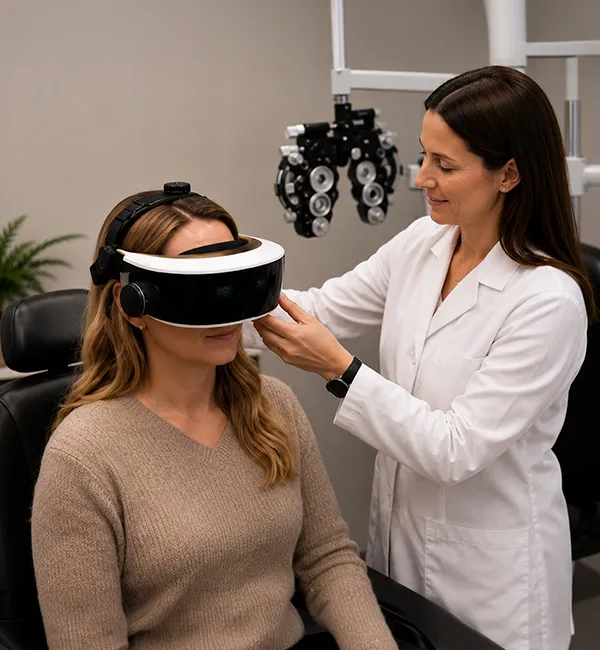
Every patient's vision goals are unique. That's why Remagin offers SimVis® technology during Refractive Lens Exchange consultations to help you better understand your lens options before surgery.
Instead of simply discussing the differences between lenses, SimVis allows you to experience how different intraocular lens options may affect your vision. This gives you valuable insight before making an important decision about your treatment.
Available exclusively at Remagin, SimVis® provides a unique way to explore your lens options before surgery.
Schedule Your Consultation


