

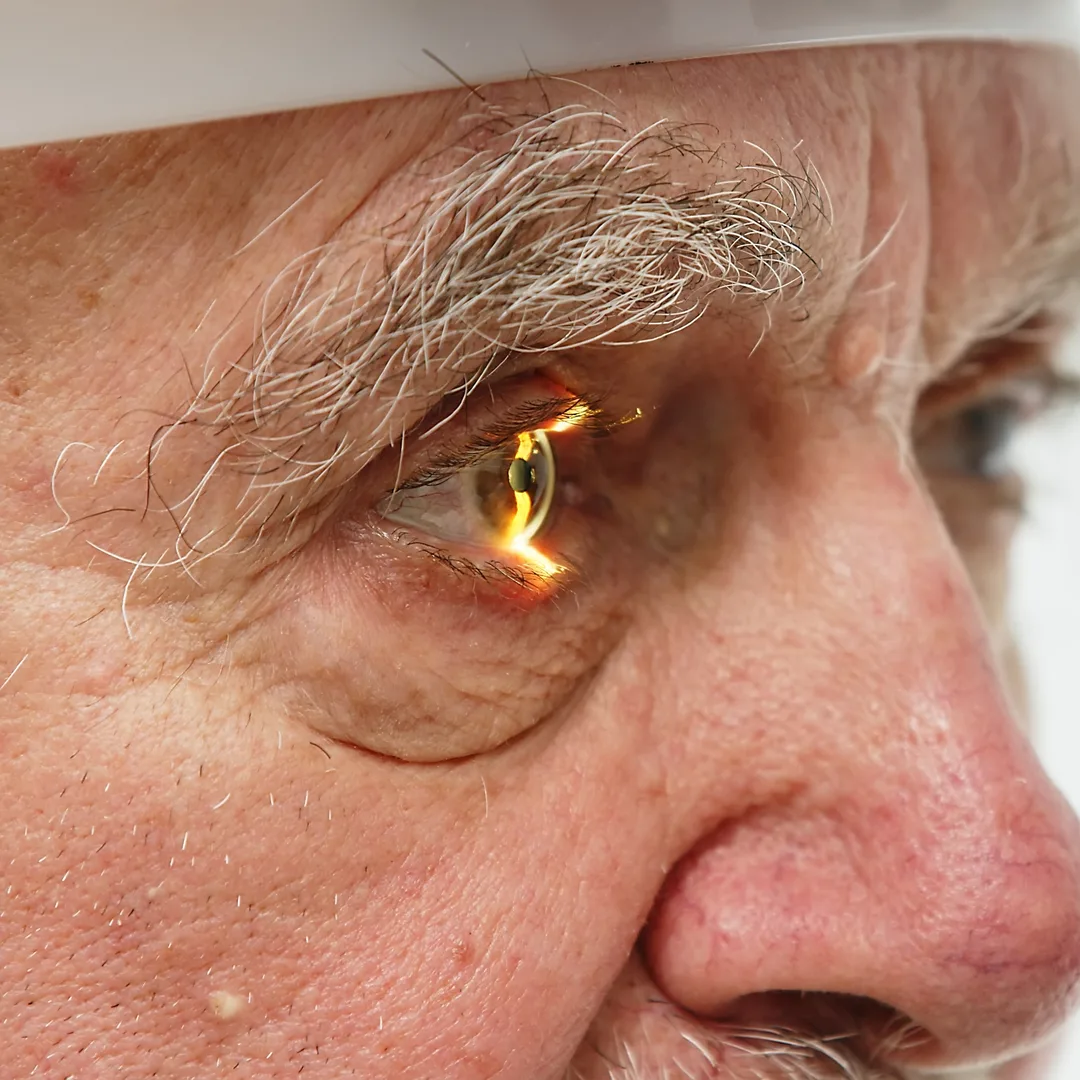
Why the Light Adjustable Lens Is Different
One of the longstanding challenges in cataract surgery is that all the important decisions about lens power have to be made before surgery, based on measurements taken before the eye has healed. Modern diagnostic tools are highly accurate, but every eye heals a little differently, and that uncertainty has always been part of the picture.
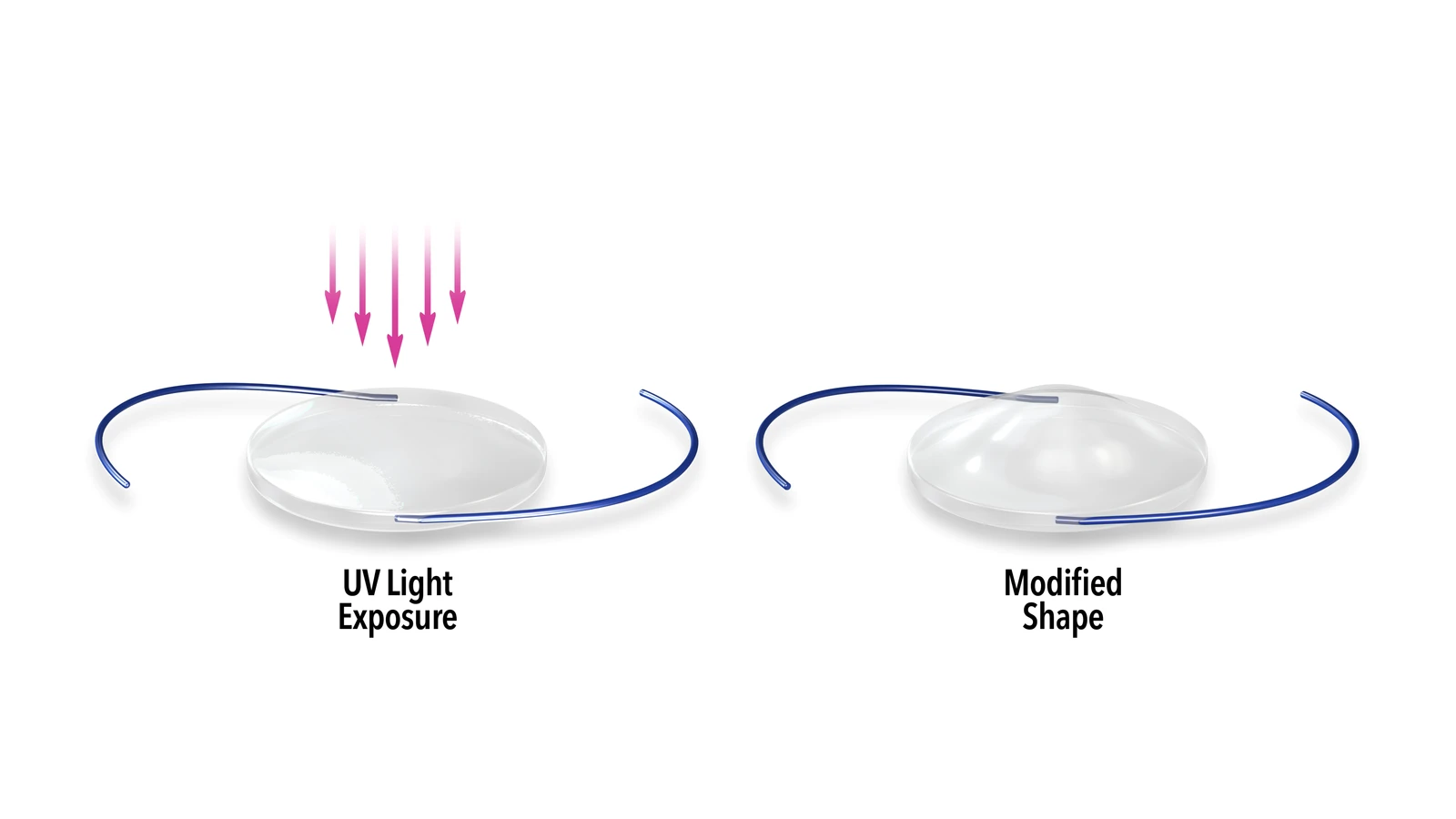
The RxSight Light Adjustable Lens changes that. It is the only intraocular lens that can be adjusted after cataract surgery, using a series of specialized UV light treatments to fine-tune vision once the eye has had time to settle. The prescription gets refined based on how the eye actually heals, not just how it is measured beforehand.
For patients who want the highest possible level of refractive precision, that is a meaningful distinction.
How the Technology Works
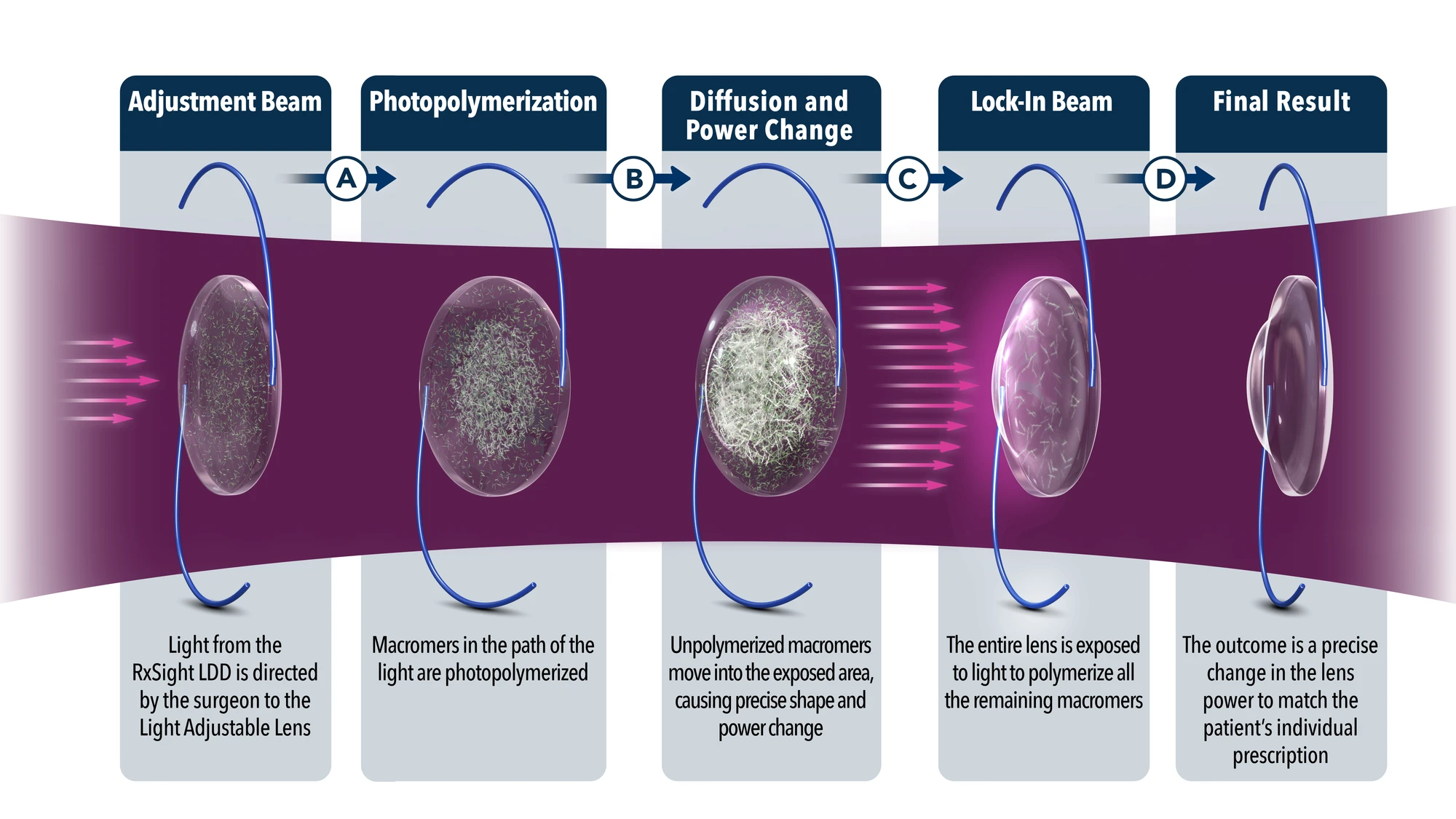
The Light Adjustable Lens is implanted during cataract surgery the same way any other intraocular lens would be. Once healing is underway, a series of in-office light treatments are used to modify the lens and adjust its focusing power. Those treatments are guided by the patient's actual visual experience after surgery, not preoperative calculations alone.
Once the desired outcome has been reached and both patient and doctor are satisfied with the result, the lens is permanently locked into place.
The Light Adjustable Lens can be used to correct nearsightedness (myopia), farsightedness (hyperopia), and astigmatism, and it is often considered for eyes that are harder to measure, such as those with corneal scarring or previous refractive surgery.
What to Expect: The Light Adjustable Lens Process
The Light Adjustable Lens journey follows a clear sequence of steps, from surgery day through the final lock-in:
- Cataract surgery: the cataract is removed and the Light Adjustable Lens is implanted in the same way as a standard lens.
- Healing: light treatments typically begin about one month after surgery, once the eye has had time to settle.
- UV-protective glasses: patients wear special glasses after surgery to protect the lens from ambient UV light, such as sunlight, until it is locked in.
- Light treatments: short, non-invasive in-office treatments fine-tune the lens power. On average, patients have about two adjustment treatments, about a week apart.
- Lock-in: two final treatments lock the prescription in place. Once the lens is stable, the protective glasses are no longer needed.
Light Adjustable Lens vs. Standard IOL
With a traditional IOL, the lens power is decided before surgery and cannot be changed afterward. Advanced diagnostic testing helps narrow down the right choice, but the final outcome depends on how the eye heals.
The Light Adjustable Lens adds a layer of flexibility that standard lenses simply cannot offer. Rather than committing to a final prescription before surgery, patients have the opportunity to refine their vision during the healing period and land on an outcome they are genuinely happy with.
For patients who want to reduce dependence on glasses or achieve the most precise refractive result possible, that flexibility is often the most compelling reason to consider the Light Adjustable Lens.
Who Benefits Most from an Adjustable IOL?
Patients Seeking Greater Precision
Because adjustments happen after surgery, patients have a degree of control over their final visual outcome that simply is not available with traditional lenses. For patients who care deeply about refractive accuracy, that matters.
Patients with Previous LASIK or PRK
Calculating lens power in eyes that have had prior refractive surgery is more complicated than in eyes that have not. The Light Adjustable Lens is particularly well suited for these patients because postoperative adjustments allow the final result to be dialed in based on real-world healing rather than relying entirely on pre-surgical math.
Patients Looking to Reduce Dependence on Glasses
For patients who want to maximize their visual outcome and minimize how much they reach for corrective eyewear after surgery, the Light Adjustable Lens offers a level of customization worth considering.
How the Right Lens Is Selected
The Light Adjustable Lens is a remarkable technology, but it is not necessarily the right choice for every patient, and Dr. Raja approaches it that way.
A comprehensive evaluation includes detailed biometry measurements, corneal analysis, and a thorough look at overall eye health. Just as important is a candid conversation about how a patient uses their vision every day, what they are hoping to achieve after surgery, and what tradeoffs feel right for their lifestyle. The goal is to identify the technology most likely to deliver long-term visual satisfaction, not simply to offer the most advanced option available.
Why Choose Remagin for the RxSight Light Adjustable Lens?
Central Florida's First Light Adjustable Lens Surgeon
Dr. Deepak Raja was the first surgeon in Central Florida to perform the Light Adjustable Lens procedure, and he personally performs every light treatment, with the Remagin team supporting each step. Videos of his LAL surgeries have also been used by RxSight to help train other physicians. With our team of experienced professionals, you can be comfortable knowing that your eyes are in the best hands.
Support Beyond Surgery Day
The Light Adjustable Lens process does not end when surgery does. The light treatment appointments that follow are where vision gets refined, and patients receive guidance at every step, from lens selection through final lock-in.
A Focus on Personalized Vision
The ability to customize vision after surgery is what makes this technology genuinely different. Dr. Raja carefully evaluates visual goals, lifestyle needs, and eye health to determine whether the Light Adjustable Lens is the right fit and how to get the best possible result from it.
Careful Planning for Better Outcomes
Great outcomes with the Light Adjustable Lens depend on more than the lens itself. Detailed measurements, thoughtful treatment planning, and close follow-up all shape the final result. Remagin's approach takes every stage of that process seriously, so patients feel informed and confident throughout.
Frequently Asked Questions about Light Adjustable Lens
An adjustable IOL is an intraocular lens that can be modified after cataract surgery. The RxSight Light Adjustable Lens uses specialized light treatments to fine-tune vision during the healing process, before the lens is permanently locked in.
For many patients, the ability to customize vision after surgery provides added confidence and a level of precision that traditional lenses cannot match. Whether it is the right choice depends on individual goals, eye health, and expectations for life after cataract surgery.
The Light Adjustable Lens is a premium lens option and typically involves costs beyond those covered by Medicare or standard insurance plans. Specific pricing is easy to discuss during a consultation, and the team at Remagin is happy to walk through what to expect financially.
Yes. Many patients who have previously had LASIK or PRK are strong candidates for the Light Adjustable Lens precisely because postoperative adjustments allow the final visual outcome to be refined in ways that account for how the eye has changed over time.
The cataract removal and lens implantation are performed the same way as with a standard IOL. The difference comes afterward, when in-office light treatments are used to adjust the lens power.
Yes. After surgery, patients wear special UV-protective glasses to protect the lens from ambient UV light, such as sunlight, while adjustments are still possible. Once the lens is locked in, the glasses are no longer needed.
Light treatments typically begin about one month after surgery, once the eye has healed. Patients then come in for a short series of in-office visits: on average two adjustment treatments about a week apart, followed by two lock-in treatments. Exact timing depends on how each eye responds.
The Light Adjustable Lens can be used to correct nearsightedness, farsightedness, and astigmatism. It is often considered for eyes that are harder to treat, such as those with previous LASIK or PRK or corneal scarring.
Learn More About the Light Adjustable Lens in Orlando
The RxSight Light Adjustable Lens offers something that standard IOLs cannot: the ability to customize vision after cataract surgery, based on real results rather than preoperative estimates. A consultation at Remagin is the best place to explore whether this technology is the right fit.
Call (407) 704-3937 or schedule an appointment (opens in a new tab) to learn more about Light Adjustable Lens technology in West Orlando.