

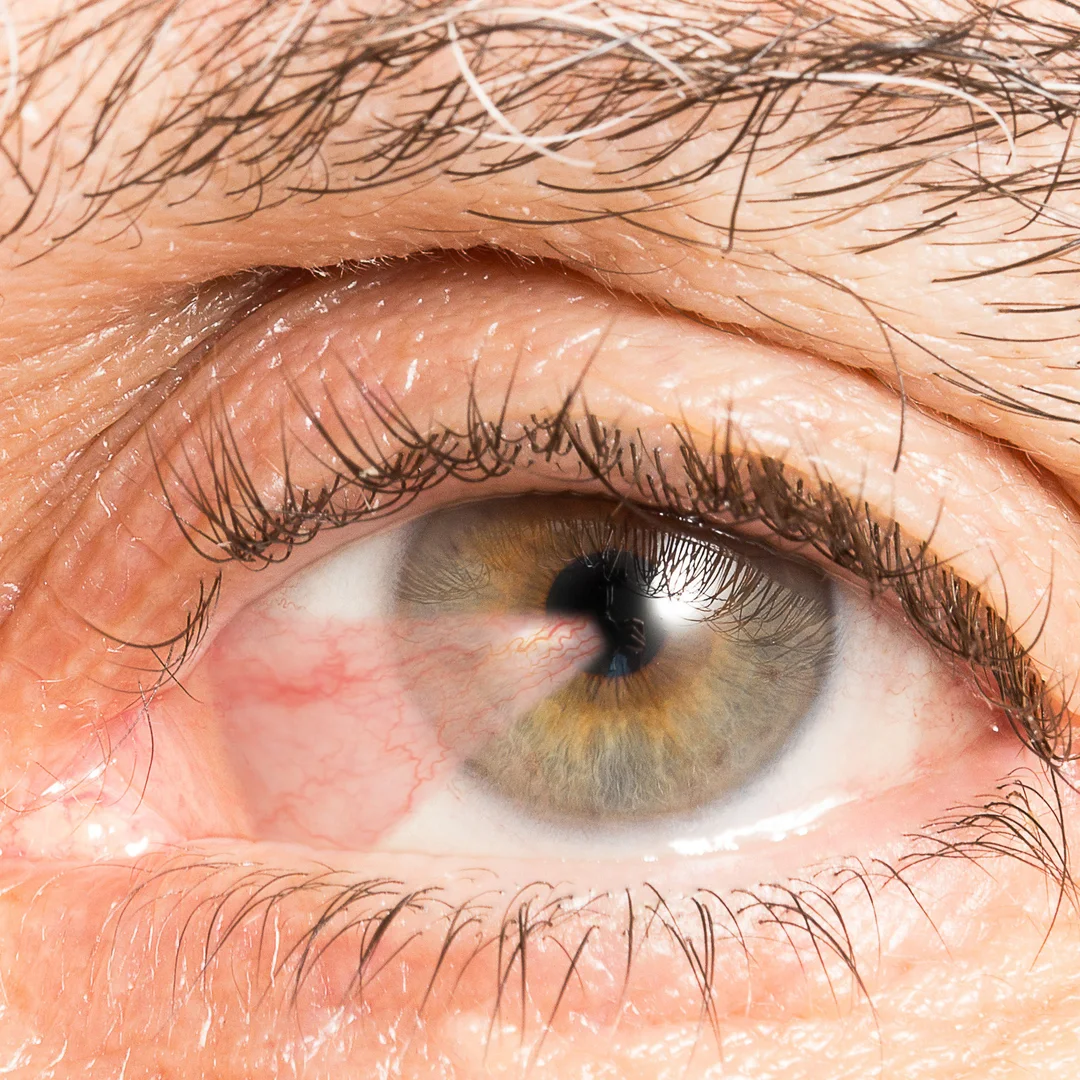
What Is a Pterygium?
A pterygium is a growth of fleshy tissue that develops on the surface of the eye, typically starting at the inner corner and sometimes extending toward the cornea. It's closely linked to long-term sun exposure, wind, and dry, dusty environments.
Small pterygia are often little more than a cosmetic concern, causing mild redness or irritation. Larger ones can grow onto the cornea itself, distort its shape, and affect vision. Left unchecked, a pterygium tends to grow slowly over time rather than resolve on its own.
Not every pterygium needs surgery. Many can be monitored and managed with simple protective measures. The right approach depends on its size, growth rate, and how much it's affecting the eye.
At Remagin, Dr. Raja evaluates each pterygium individually, so the recommendation reflects how it's actually behaving, not just its appearance at a single visit.
What Determines the Right Next Step
A pterygium that's small and stable may only need observation and protective measures like sunglasses and lubricating drops. One that's actively growing, encroaching on the cornea, or affecting vision is a different story.
Waiting too long on a growing pterygium can allow it to distort the cornea further, making the eventual surgical outcome less predictable. On the other hand, operating on a pterygium that isn't truly bothering the patient introduces surgical risk without a clear benefit.
Getting the timing right, treating when there's a real reason to, and holding off when there isn't, is central to a good outcome. That means considering growth rate, corneal involvement, symptoms, and the patient's own priorities.
Pterygium Treatment Options at Remagin
Observation and Protective Care
For small, stable pterygia that aren't affecting vision, regular monitoring paired with UV-protective sunglasses and lubricating drops is often all that's needed. This approach avoids surgical risk while keeping an eye on any changes over time.
Medical Management
Topical anti-inflammatory drops can help reduce redness and irritation from an active pterygium, particularly during flare-ups triggered by sun, wind, or dry conditions, though they won't shrink the growth itself.
Patients with pterygium are also routinely evaluated for Demodex mites along the lash line, since their waste and rapid reproduction can intensify the redness, inflammation, and tissue growth associated with pterygium. Anti-inflammatory drops help manage these flare-ups, but resolving the mites themselves requires targeted miticidal treatment, completed before surgery to support a smoother outcome.
Pterygium Excision Surgery
For pterygia that are growing, encroaching on the cornea, or causing persistent irritation, surgical removal is often the most effective option. The growth is carefully excised from the eye's surface, restoring a smoother, clearer surface underneath.
Conjunctival Autografting
To reduce the chance of a pterygium returning after surgery, a small piece of healthy tissue from elsewhere on the eye's own surface is transplanted to cover the area where the growth was removed. This technique significantly lowers recurrence rates compared with excision alone, and it's the approach Dr. Raja typically favors for surgical cases.

How Dr. Raja Helps You Choose the Right Approach
The process starts with a close look at the pterygium itself: its size, how far it extends toward the cornea, and whether it's actively growing or has been stable for some time.
Dr. Raja also asks about symptoms, how much the growth bothers the patient day to day, and any prior episodes of irritation or redness, since the right plan for a small, stable pterygium looks nothing like the right plan for one that's advancing toward the visual axis. The result is a recommendation based on how the eye is actually behaving, not a reflex toward surgery.
Why Choose Remagin for Pterygium Treatment?
Expertise in Ocular Surface Disease:
Dr. Deepak Raja is a board-certified ophthalmologist with fellowship training in cornea and external disease, with particular experience managing conditions that affect the eye's surface, including pterygiua.
Surgical Technique Focused on Reducing Recurrence:
Dr. Raja's preferred use of conjunctival autografting reflects a focus on long-term outcomes, not just removing the growth, but keeping it from coming back.
Individualized Treatment Timing:
Not every pterygium needs the same approach. Recommendations are based on growth pattern and symptoms, so patients aren't rushed into surgery, or left waiting too long when it's genuinely needed.
Frequently Asked Questions About Pterygium
No. Small, stable pterygia are often managed with observation and protective measures. Surgery is generally reserved for growths that are advancing, affecting vision, or causing persistent discomfort.
Long-term UV exposure, wind, and dry or dusty conditions are the most common contributing factors, which is part of why it's frequently seen in sunny climates like Florida.
Yes, recurrence is possible, though techniques like conjunctival autografting substantially reduce that risk compared with excision alone.
Coverage generally depends on medical necessity, such as vision changes or persistent symptoms. The team at Remagin can walk you through what to expect financially during consultation.
Most patients experience some redness and irritation for a few weeks, with full healing typically continuing over a slightly longer period. Dr. Raja provides specific guidance based on the surgical approach used.
Schedule a Pterygium Evaluation in West Orlando
A pterygium doesn't need to be ignored, and it doesn't need to be treated more aggressively than necessary either. A thorough evaluation at Remagin helps determine exactly where things stand and what, if anything, should be done next.
To learn more about pterygium treatment in West Orlando, call (407) 704-3937 or schedule a consultation (opens in a new tab) today.