

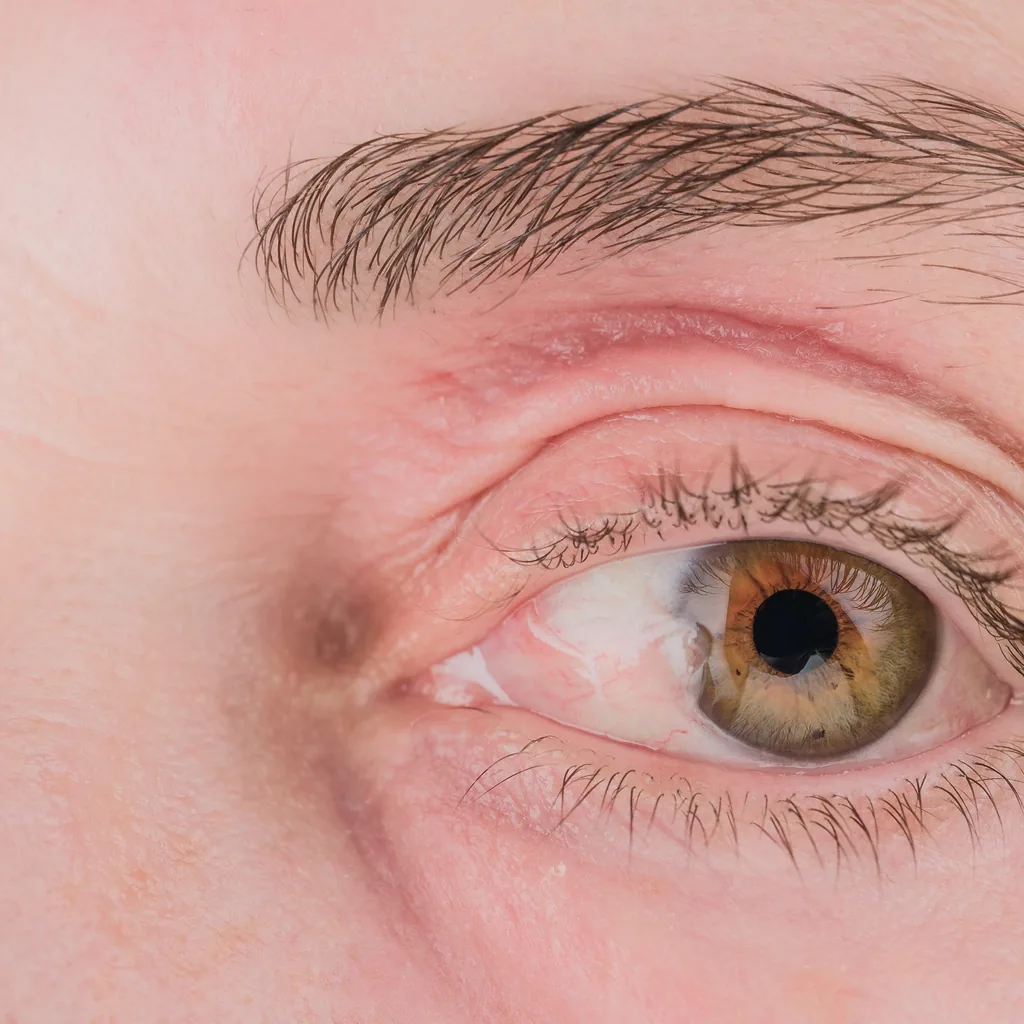
What Are Pinguecula and Pterygium?
Pinguecula and pterygium are both growths that develop on the surface of the eye, and both are closely tied to long-term sun exposure, wind, and dry, dusty environments, which is part of why they're so common in Florida. While related, they aren't the same condition.
A pinguecula is a small, yellowish bump that forms on the conjunctiva, the clear tissue covering the white of the eye. It stays confined to that area and doesn't grow onto the cornea. Most pingueculas cause mild irritation at most, and many patients barely notice them.
A pterygium, on the other hand, is a growth that can extend further, sometimes reaching onto the cornea itself. As it grows, it can distort the cornea's shape and, in more advanced cases, affect vision. Unlike a pinguecula, a pterygium tends to progress rather than stay put.
Why Monitoring and Treatment Timing Matter
Most pingueculas stay put for years and need nothing more than routine follow-up. Pterygia behave less predictably. Some sit unchanged for a long time, while others slowly creep toward the cornea, and there's no way to know which path a given case will take without watching it over time.
That uncertainty is exactly why timing decisions are made case by case rather than by a fixed rule. Acting too early on a growth that was never going anywhere adds surgical risk for no real gain; acting too late on one that was quietly advancing can mean a more complicated repair and a longer road to a clear, comfortable eye.
Regular follow-up visits are what make the difference, comparing how a growth looks today against how it looked six or twelve months ago, rather than relying on how it appears at any single appointment.
How Pinguecula Are Managed
Most pingueculas are managed without surgery. Lubricating drops and UV-protective sunglasses ease irritation and slow further sun-related changes, and that's enough for the large majority of patients. When a pinguecula becomes inflamed, a short course of anti-inflammatory drops can settle things down quickly.
Surgical removal is uncommon and is considered on a case-by-case basis. For some patients, removal may be appropriate when a pinguecula remains chronically inflamed despite treatment, interferes with contact lens wear, or causes persistent cosmetic concern. The decision to proceed with surgery depends on the size, symptoms, appearance, and individual goals of the patient.
How Pterygia Are Managed
A pterygium that's small and stable can often be watched in the same way, with protective drops and regular monitoring to confirm it isn't advancing. Once a pterygium starts encroaching on the cornea, causing visual distortion, or triggering ongoing irritation that drops can't manage, surgery becomes the more reliable path forward.
Dr. Raja's preferred surgical technique pairs excision with conjunctival autografting, transplanting a small piece of the eye's own healthy tissue over the treated area. This step meaningfully lowers the chance of the pterygium returning, which is one of the more common frustrations with pterygium surgery done without it.

Getting the Diagnosis Right First
Pinguecula and pterygium can look similar to the untrained eye, and telling them apart accurately is the first real decision point. A slit lamp exam confirms whether the growth is confined to the conjunctiva or has started encroaching on the cornea, which changes everything about how it's managed from there.
Dr. Raja also looks at photographs over time when available, since documenting change is often more useful than any single visit. Symptom pattern matters too, whether irritation is constant or flares with sun and wind exposure can point toward how active the growth really is. Patients rarely leave a consultation unsure of which condition they have or why a particular plan was chosen.
Why Choose Remagin
Accurate Differentiation Between Conditions:
Dr. Deepak Raja is a board-certified ophthalmologist with fellowship training in cornea and external disease, which shapes how carefully he distinguishes pinguecula from Pterygia before recommending anything.
A Conservative Starting Point:
Most patients don't need surgery, and Remagin's approach reflects that. Protective, non-surgical care comes first whenever it's a reasonable option.
Outcomes-Focused Surgical Care When It's Needed:
When surgery is the right call, the technique used, including conjunctival autografting, is chosen specifically to reduce the odds of the growth returning.
Frequently Asked Questions
A pinguecula stays on the conjunctiva and doesn't grow onto the cornea. A pterygium can extend onto the cornea and, if left untreated, may progress and affect vision.
No. Many are managed with observation and protective measures. Surgery is generally reserved for pterygia that are advancing, affecting vision, or causing persistent discomfort.
Long-term UV exposure, wind, and dry or dusty conditions are the most common contributing factors, which is part of why they're frequently seen in sunny climates like Florida.
Coverage generally depends on medical necessity, such as vision changes or persistent symptoms. The team at Remagin can walk through what to expect financially during consultation.
Most patients experience some redness and irritation for a few weeks, with full healing typically continuing over a slightly longer period. Dr. Raja provides specific guidance based on the surgical approach used.
Schedule a Consultation in West Orlando
If you've noticed a bump or discoloration on the surface of your eye, guessing whether it's a pinguecula or a pterygium isn't something you need to do on your own. An evaluation at Remagin sorts out which condition it is, how it's likely to behave, and whether it needs anything more than routine follow-up.
Call (407) 704-3937 or schedule a visit (opens in a new tab) to get a clear answer and a plan that fits.