


Cataracts are one of the most common causes of vision changes as people age, but they're also one of the most misunderstood. Many people believe cataracts only affect older adults or that they develop simply because of age. While aging is the leading cause, it's far from the only one.
Health conditions like diabetes, long-term use of certain medications, prolonged sun exposure, and even family history can increase your risk of developing cataracts sometimes years earlier than expected.
If you've been wondering what causes cataracts, this guide explains the most common and often overlooked cataract risk factors, how to recognize the symptoms, and when it may be time to see an eye doctor.
A cataract occurs when the eye's natural lens becomes cloudy, making it harder for light to pass through clearly. As the lens loses its transparency, vision gradually becomes blurry, hazy, or less vibrant.
For most people, this happens naturally over time. As we age, proteins within the lens begin to break down and clump together, creating cloudy areas that interfere with clear vision.
Although aging is the most common cause, cataracts can also develop because of certain medical conditions, medications, injuries, and lifestyle factors.
Several factors can increase your chances of developing cataracts. Some are related to aging, while others are connected to your overall health and lifestyle.
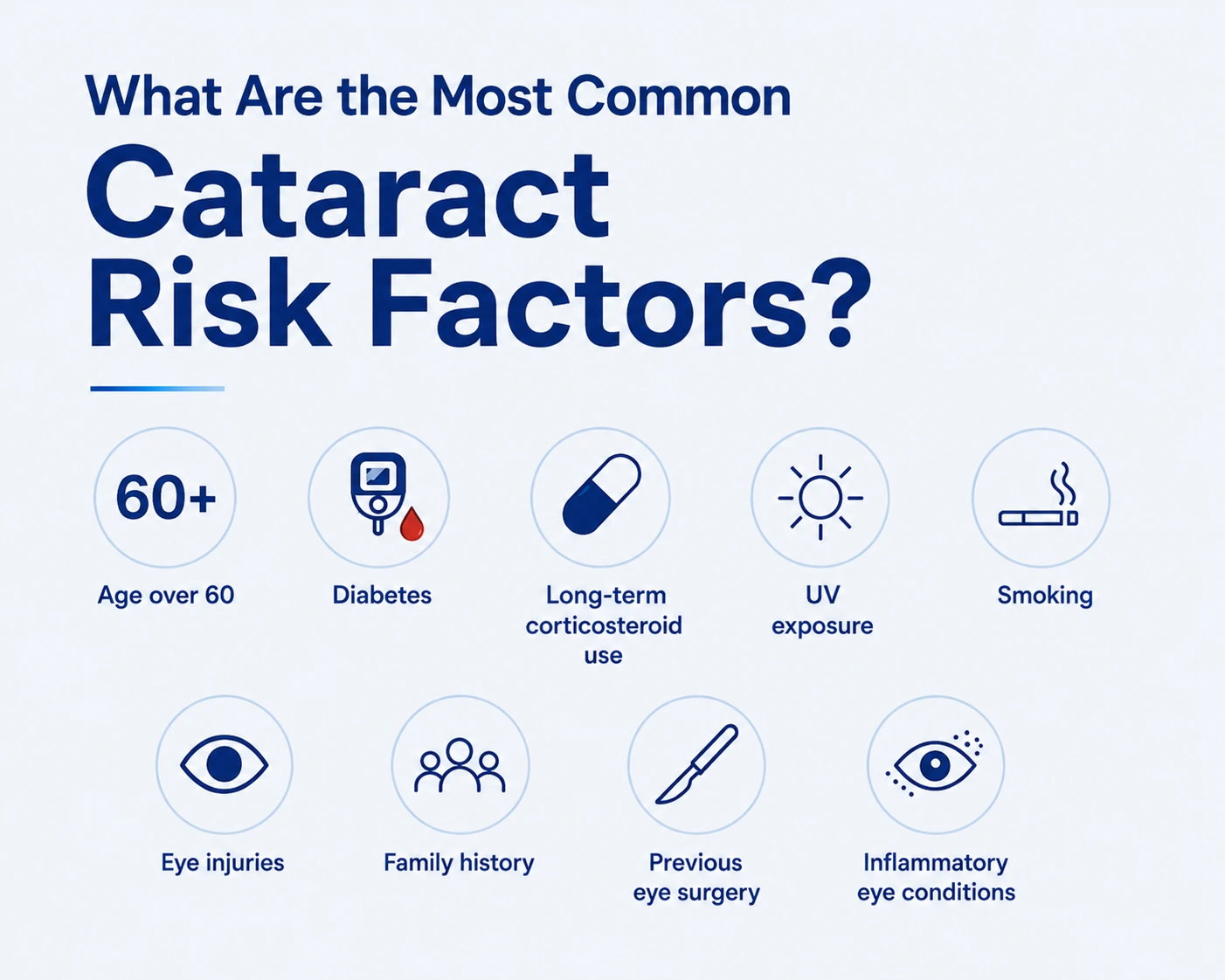
Common cataract risk factors include:
Having one or more of these risk factors doesn't mean you'll definitely develop cataracts, but it does make routine eye exams even more important for protecting your vision.
Yes. Some medications can increase the risk of developing cataracts, especially when they're used for an extended period.
The medications most commonly associated with cataracts are corticosteroids, including:
These medications may increase the risk of developing steroid-induced cataracts, particularly when taken at higher doses or over many months or years.
If your doctor has prescribed steroid medication, don't stop taking it without medical advice. Instead, schedule regular eye examinations so any changes in your vision can be detected early.
Diabetes is one of the most significant medical conditions linked to eye health and cataracts.
High blood sugar levels can cause changes in the eye's natural lens, making it become cloudy more quickly. As a result, people with diabetes often develop cataracts at a younger age than those without diabetes.
Keeping your blood sugar under control, following your treatment plan, and having regular diabetic eye exams are important steps in protecting your vision.
Long-term exposure to ultraviolet (UV) rays may contribute to the development of cataracts over time.
For people living in sunny climates like Central Florida, protecting the eyes from UV damage is especially important. Spending years outdoors without proper eye protection may increase your overall cataract risk.
You can help protect your eyes by:
These simple habits support long-term eye health and may reduce one of the modifiable risk factors for cataracts.
Although cataracts are often associated with older adults, they're becoming increasingly common in people in their 50s and sometimes even earlier.
Early cataracts may be linked to:
If you're in your 40s or 50s and notice blurry vision, glare while driving, or frequent changes in your glasses prescription, don't assume it's simply part of aging. A comprehensive eye exam can determine whether cataracts or another eye condition is responsible.
Because cataracts develop gradually, many people don't realize they have one until vision starts affecting daily activities.
Early symptoms may include:
These symptoms can also be caused by other eye conditions, so it's important to have them evaluated by an eye care professional.
This is one of the most common questions eye doctors hear.
Unfortunately, once a cataract has formed, it cannot be reversed with eye drops, vitamins, supplements, or home remedies.
While maintaining a healthy lifestyle supports overall eye health, there is currently no scientifically proven treatment that can remove or reverse an existing cataract without surgery.
Healthy habits that may help protect your eyes include:
These habits may help support long-term eye health, but they won't eliminate an existing cataract.
There's no single timeline for cataract development.
Most age-related cataracts progress slowly over several years. However, some cataracts may develop more quickly depending on your overall health and risk factors.
Factors that may influence how quickly cataracts develop include:
Regular eye exams allow your ophthalmologist to monitor cataracts and recommend treatment when they begin affecting your vision.
Not all cataracts can be prevented because aging naturally changes the eye's lens. However, certain lifestyle choices may help reduce your overall risk or slow their progression.
You can support healthy vision by:
Preventive eye care plays an important role in maintaining healthy vision throughout your life.
In the early stages, cataracts don't always require surgery.
Mild symptoms can often be managed by:
These adjustments may improve your vision temporarily, but they don't remove the cataract.
When the cloudy lens begins interfering with everyday activities such as reading, driving, working, or enjoying hobbies, cataract surgery is the only treatment that removes the cataract and restores clearer vision.
During surgery, the cloudy natural lens is replaced with a clear artificial intraocular lens (IOL). Your ophthalmologist will recommend surgery based on your symptoms, vision needs, and lifestyle not simply because a cataract is present.
Many people assume cataracts should be removed as soon as they're diagnosed, but that's not always necessary.
Cataract surgery is generally recommended when vision changes begin affecting your quality of life.
You may benefit from discussing surgery with your eye doctor if you:
Your eye doctor will help determine the right time for surgery based on your individual needs and the impact the cataract is having on your daily life.
Schedule a comprehensive eye exam if you experience:
Early diagnosis can help determine whether cataracts or another eye condition is causing your symptoms and allow you to explore the most appropriate treatment options.
Understanding what causes cataracts is the first step toward protecting your vision. While cataracts are a natural part of aging for many people, other factors such as diabetes, long-term steroid use, smoking, and prolonged UV exposure can increase your risk of developing them earlier.
If you've noticed blurry vision, increased glare, difficulty driving at night, or other changes in your eyesight, don't wait for the symptoms to worsen. A comprehensive eye exam can identify whether cataracts or another eye condition is affecting your vision and help determine the most appropriate next steps.
At Reamagin, Dr. Deepak Raja and our experienced eye care team are committed to providing personalized evaluations and advanced cataract care. Whether you're looking for answers about your symptoms or exploring treatment options, we're here to help you make informed decisions and maintain clear, healthy vision.
Schedule a comprehensive eye exam at Reamagin today.
The most common cause is aging. Over time, proteins inside the eye's natural lens break down and clump together, causing the lens to become cloudy. However, diabetes, long-term steroid use, smoking, UV exposure, and eye injuries can also increase your risk.
Yes. Long-term use of corticosteroids, including prednisone, steroid inhalers, steroid eye drops, and certain nasal sprays, has been linked to an increased risk of cataracts.
Yes. Cataracts can develop in your 50s or even earlier, particularly if you have diabetes, use steroid medications, smoke, or have significant UV exposure.
No. There is currently no scientifically proven way to reverse an existing cataract with medications, supplements, or home remedies. Cataract surgery is the only treatment that removes the cloudy lens.
Most cataracts develop slowly over several years, but the rate varies from person to person. Diabetes, steroid medications, and certain health conditions may cause cataracts to progress more quickly.
Glasses and improved lighting may help manage mild symptoms, but they don't remove the cataract. Once vision is significantly affected, cataract surgery is the only treatment that replaces the cloudy lens with a clear artificial lens.