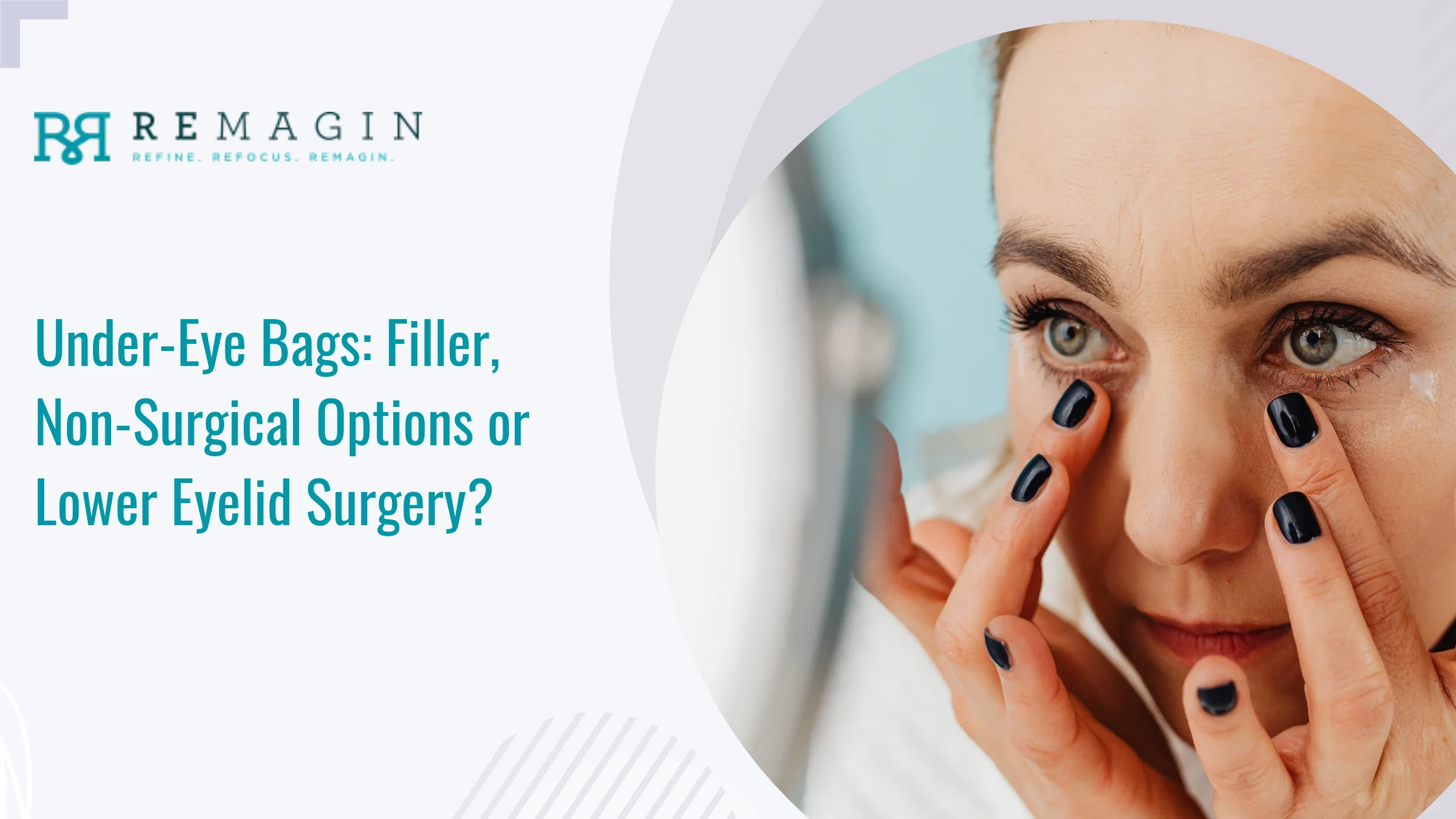
Puffiness under the eyes can look the same in a mirror yet come from very different causes. One person has a true bulge of fat. Another has a hollow that casts a shadow. A third has thin, dark skin that no treatment for bags will change.
Choosing between filler, skin treatments, and surgery starts with knowing which of these you actually have. The wrong match can leave results that disappoint.
What Causes Under-Eye Bags?
The lower eyelid sits over small pockets of fat that cushion the eye. A thin membrane called the orbital septum holds that fat in place. With age and genetics, the membrane can weaken, and fat may bulge forward.
Other changes happen at the same time. The groove between the lower eyelid and the cheek, often called the tear trough, can deepen. Skin may thin or loosen, and volume in the upper cheek can drop.
Together, these changes create what most people call bags. It is rarely one thing, which is why options differ from person to person.
Is It a Bag, a Hollow, or a Dark Circle?
Three common patterns are easy to mix up, and each points to a different path:
Many people have a combination. A common one is a mild bulge sitting just above a hollow, which makes each look worse.
When Does Filler Make Sense?
Filler works best for hollows. A hyaluronic acid filler, such as those in the Juvederm and Restylane families, is placed to soften the tear trough and reduce the shadow beneath the eye.
It suits people with volume loss and little or no bulging fat. It is a quick in-office treatment, and hyaluronic acid can be dissolved if needed. Results often last from about 6 to 12 months, and sometimes longer.
Learn more about dermal fillers and which areas they can treat.
Can Filler Make Under-Eye Bags Worse?
Yes, in the wrong setting. Filler adds volume, so placing it under an eye that already has bulging fat can increase puffiness rather than reduce it.
Filler also does not remove or reposition fat, so it cannot fix a true fat bag.
This is why an assessment of your anatomy should come before any decision, and why an oculofacial surgeon's view can matter. Specialists in this region see how the eyelid, fat, and cheek relate to one another.
What Other Non-Surgical Options Exist?
When the concern is skin quality or color rather than volume, treatments for the skin itself may help. Depending on your skin, a provider may suggest:
- Laser resurfacing to improve texture and tone
- Microneedling, sometimes with PRP
- Medical-grade skincare
- Targeted treatment for pigmentation
Options like laser skin resurfacing can improve fine lines and tone around the eyes. Results vary, and dark circles from deep pigment or vessels can be harder to change. A realistic discussion of what each option can do helps set expectations.
When Is Lower Eyelid Surgery the Right Choice?
Surgery is the option that addresses the cause of true fat bags. Lower eyelid blepharoplasty can reduce bulging fat, and in many cases it can reposition fat into the hollow below to smooth the transition to the cheek.
Depending on your anatomy, the plan may also tighten the eyelid tendon, remove excess skin, or lift the midface. Surgery is individualized rather than one standard approach.
Lower eyelid surgery has less margin for error than upper eyelid surgery. Poor technique can affect eyelid position, so surgeon training in the eyelid region matters. Surgery tends to suit people whose main concern is persistent bulging that does not change from day to day.
What Is Recovery Like?
Expect swelling and bruising that peak in the first days and ease over the following weeks. Final results continue to settle for months as swelling clears.
Timelines vary by procedure and by patient, and lower eyelid surgery generally involves more healing than the upper lids. You can see how upper eyelid surgery recovery unfolds week by week for a general sense of the process. Your surgeon will give guidance specific to you.
Filler, by contrast, usually involves minimal downtime, though temporary swelling or bruising can occur.
How Do You Choose Between Filler and Surgery?
A few questions help narrow it down. Is there a soft bulge, a hollow, or both? Does the puffiness change with the day or stay constant? Is the skin loose or crepey as well? Would you prefer a reversible treatment first, and how long do you want results to last?
Many surgeons suggest filler as a lower-commitment trial for people with hollows. Those with clear fat bags are often better served by surgery. Your surgeon can walk through the procedures available and how each one fits your anatomy.
When Should Puffiness Be Checked by a Doctor?
Some changes are not cosmetic. See an eye doctor promptly for:
- Sudden or one-sided swelling
- Redness, warmth, or pain
- Changes in vision
- Swelling that comes with other symptoms, such as eye bulging
Long-lasting puffiness that appears with fatigue, weight changes, or thyroid symptoms should also be checked, since underlying conditions can play a role.
Match the Treatment to the Cause
The right treatment for under-eye bags depends on whether you have a bulge, a hollow, a skin concern, or a mix. Filler can soften a hollow, skin treatments can improve tone, and lower eyelid surgery addresses true fat bags.
A clear diagnosis up front also helps you avoid paying for a treatment that cannot address what you see in the mirror. Matching the option to the cause tends to lead to more satisfying results.
At Remagin, patients can meet with an oculofacial plastic surgeon to review eyelid anatomy and discuss which options may fit. Schedule an appointment for a personalized consultation that covers realistic results, recovery, and timing.
Frequently Asked Questions About Under-Eye Bags
1. What is the best treatment for under-eye bags?
It depends on the cause. Filler suits hollows, surgery suits true fat bags, and skin treatments suit texture or tone concerns.
2. Does under-eye filler get rid of bags?
Filler softens hollows but does not remove bulging fat, and it can make true bags look fuller.
3. How long does under-eye filler last?
Results often last from about 6 to 12 months, though this varies by patient and product.
4. Is lower eyelid surgery permanent?
Results are long-lasting, but aging continues, so appearance still changes over time.
5. Can dark circles be treated?
Sometimes. Dark circles from hollows may respond to filler, while those from pigment or thin skin may need skin-focused treatment, and results vary.
More Resources: